WDSL

London web design guide

By Web Design Studio London

How London Tattoo Studios Win Clients Through Their Website

Tattoo clients choose an artist months before their appointment — scrolling portfolios, comparing styles, and researching studios long before they enquire. The studios that win the most desirable bookings are the ones with a website that makes that research easy and that trust-building fast.

Ask for advice
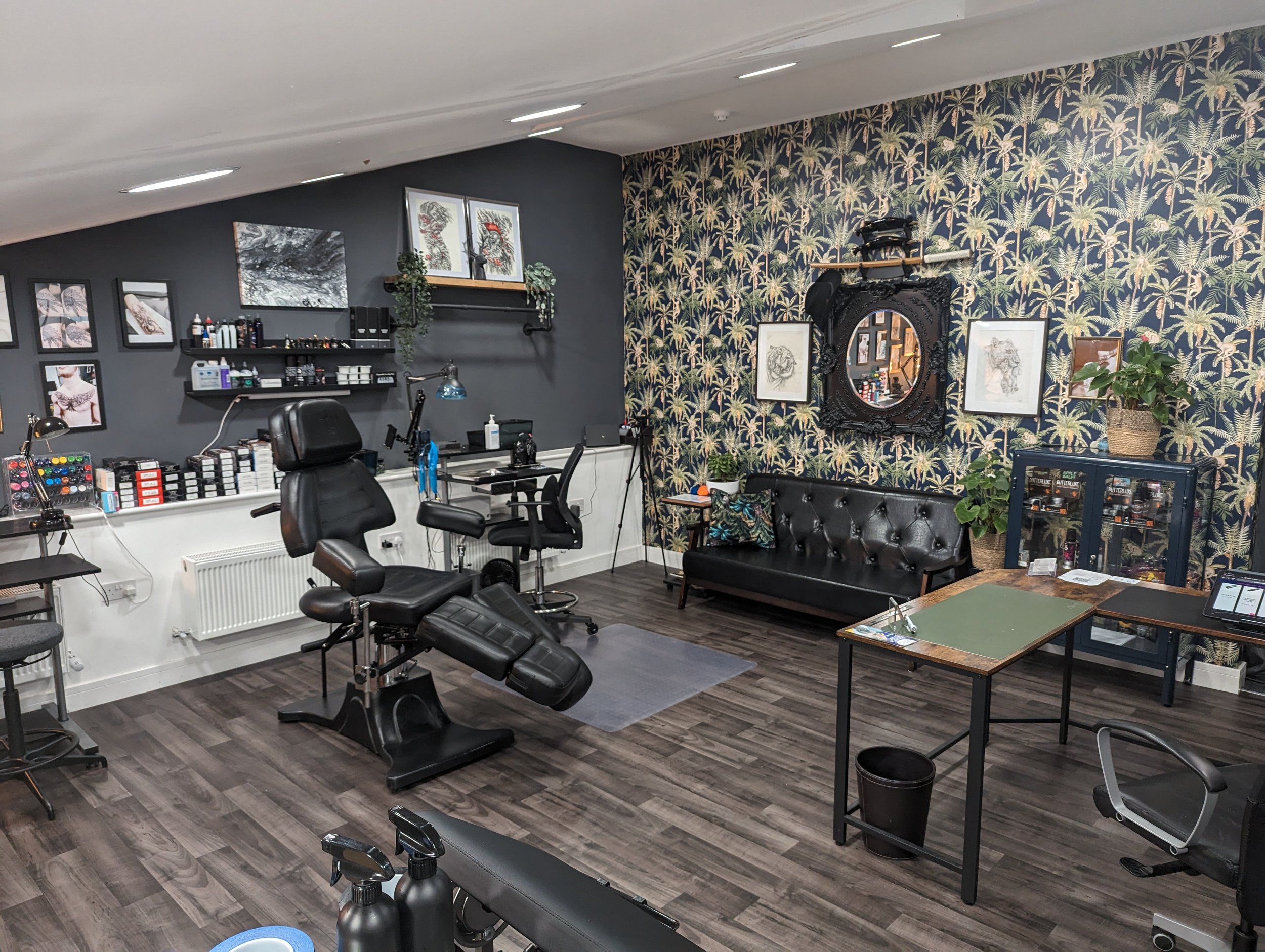
Professional tattoo artist at work in a clean and well-lit London tattoo studio

01

Style Is the Primary Purchase Decision — Your Website Must Make It Searchable

A client who wants a fine line tattoo and a client who wants Japanese traditional work are not the same customer, and they search differently — 'fine line tattoo artist London', 'Japanese tattoo studio East London', 'blackwork tattoo London', 'realism tattoo artist Shoreditch'. Your studio website needs a dedicated page for each tattoo style you specialise in, each optimised for the exact search term that style's clients use and populated with portfolio images specific to that style.

A single mixed portfolio page ranks for none of those searches and converts worse because clients cannot immediately see work that matches their idea. Each style page should include a filterable gallery with artist attribution, a description of the style's key characteristics (linework weight, shading technique, typical subjects), and examples of the reference input your artists work from. Studios that have five style pages outperform studios with one portfolio page consistently — and the gap widens over 12–18 months as each page accumulates links and search signals independently.

02

Artist Profile Pages That Drive Direct Bookings

Clients book artists, not studios — and a client who has identified the artist they want will search for that artist by name before they enquire. An individual page for each artist, with their own portfolio, biography, style specialism, and a direct booking enquiry link, captures that name-search traffic and makes the choose-and-book flow happen on your website rather than via Instagram DM.

Artist pages also build each artist's independent SEO profile, meaning your studio ranks for 'blackwork artist London' through one artist and 'neo-traditional tattoo East London' through another — multiplying your search footprint across styles and locations. When a guest artist visits your studio, a temporary artist page for their visit creates a search result for their name in the context of your studio — and often earns a backlink from their own Instagram bio or website during the booking window, which passes authority to your domain.

03

Booking Forms Built Around the Brief Reduce Admin and Improve Quality

A generic contact form — name, email, message — produces incomplete briefs that require three rounds of back-and-forth before you can quote accurately. A booking enquiry form that captures tattoo style, body placement, approximate size in centimetres, reference images (upload field accepting JPG and PNG), preferred artist, and date flexibility gives you a qualified brief at first contact and signals to the client that your studio is organised and selective about what it takes on.

Requiring a non-refundable booking deposit at the enquiry stage — collected via Stripe or Square integrated into the form — filters out time-wasters and eliminates the no-show problem at the consultation stage. An aftercare information page, genuinely detailed and signed off by your lead artist, also helps SEO by targeting 'tattoo aftercare London' and 'tattoo peeling healing' adjacent searches — reducing repeat client questions, building long-term trust, and giving existing clients a page they actually share.

04

Legal Compliance: Local Authority Registration and Needle Safety

All tattoo studios in London must be registered with their local authority under the Local Government (Miscellaneous Provisions) Act 1982 — operating without registration is a criminal offence and a significant reputational liability if publicised. Your local authority registration number, the issuing authority, and your studio's needle safety, sterilisation, and single-use equipment policy should appear on your website, not hidden in a PDF.

Clients — particularly first-timers — increasingly research these before booking. A studio that displays its cross-contamination prevention process (single-use needles, autoclave sterilisation for reusable equipment, barrier wrap protocol), its age verification procedure (mandatory 18+ check, policy on ID), and its allergy consultation process removes the anxieties that prevent borderline clients from committing. Studios that address these questions proactively on their website consistently see better conversion from first-time clients, who represent the majority of new bookings for most London studios.

05

Flash Days, Guest Artists, and the Content Machine

Flash days are one of the highest-ROI SEO content formats available to a tattoo studio. A page announcing an upcoming flash day — named artist, date, flash sheet designs available, prices, and a booking link — ranks for the guest artist's name and style combined with London, earns backlinks from the visiting artist's own social media bio during their booking window, and creates time-pressure urgency that drives faster decisions than a standard enquiry form.

A studio running four flash days or guest artist visits per month generates approximately 48 landing pages per year. Each page typically ranks for multiple long-tail searches, earns at least one external link, and remains indexable as a record of studio output and collaborator credibility. Studios that archive their flash day pages — rather than deleting them after the event — build a documented history that signals longevity and breadth of network to both Google and prospective clients. Over two years, this archive becomes a significant ranking asset that a new studio cannot replicate overnight.

06

Build Scope and ROI for London Tattoo Studios

A tattoo studio website built to the standard above — individual artist pages, style-specific portfolio pages, brief-optimised enquiry form with deposit collection, compliance trust section, flash day/guest artist page template, and borough SEO — costs between £1,600 and £3,500 depending on the number of resident artists and style pages required.

The return on this investment is straightforward to calculate. If your studio's average booking value is £300 and your website generates three additional bookings per month from organic search, that is £900 per month in revenue from a one-time investment — breaking even in two to four months. Studios that were previously dependent on Instagram for all new client acquisition, and therefore vulnerable to algorithm changes and DM volume, find that an SEO-optimised website provides consistent baseline bookings regardless of whether their latest post performs. The combined effect of style pages, artist pages, and flash day archives makes the search footprint progressively harder for competitors to displace.

Vali Neagu

Written by

Vali Neagu

Founder, Web Design Studio London

Building conversion-focused websites and web applications for London businesses. Next.js, design, and strategy — in-house, fixed price.

Related services

Turn the research into a page.

These commercial pages connect the guide to enquiry-focused services, which supports topical depth and conversion.