WDSL

London web design guide

By Web Design Studio London

Fill More Tables: What London Restaurants Need From Their Website

Most London restaurants are invisible to the diner who opens Google and types 'Italian near me' at 7pm on a Friday. If your website is missing, outdated, or unusable on a phone, that booking goes to the place down the road.

Ask for advice
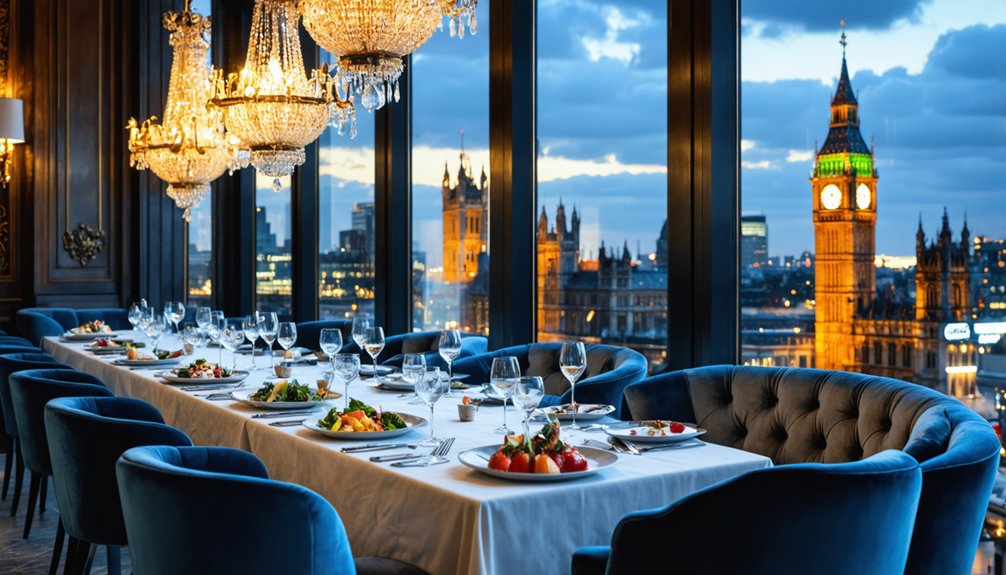

Busy London restaurant dining room with modern interior

01

Why a Weak Website Costs a London Restaurant Real Covers

London has over 17,000 restaurants, and the diner who opens Google at 7pm on a Friday night is not scrolling past the first three results. If your site loads slowly, doesn't show your current menu, or breaks on mobile, that booking goes somewhere else before they've seen your food. The problem isn't always the food or the price — it's that the digital first impression fails to convert curiosity into a confirmed reservation. A slow, poorly structured site also signals to Google that you're less relevant than competitors, which compounds the problem: you drop in rankings, fewer people find you, and fewer people book. Restaurants in every London borough are losing covers they never even knew were available because their website doesn't do the job their kitchen does. A well-built site is not a luxury; it's the host who seats guests before they walk out the door.

02

Your Menu Must Be HTML — Not a PDF or an Image

Uploading a scanned menu PDF or a photographed image of your printed menu is one of the most damaging things a restaurant can do online. Google cannot read either format, which means your dishes, ingredients, and cuisine type are invisible to search. Diners on mobile can't pinch-to-zoom a PDF in a browser tab without frustration, and the majority of restaurant searches happen on a phone. An HTML menu — structured with proper headings, allergy information, and section labels — is crawlable by search engines and readable on every screen size. It also updates in minutes when your chef changes a dish or you launch a seasonal special, instead of requiring a new PDF to be uploaded each time. We build menus as live, indexed HTML pages with dietary filters and clear section navigation, so the diner who searches 'vegan tasting menu Shoreditch' can land directly on a page that answers that query and prompts a booking.

03

Online Booking Integration That Reduces Platform Commission

OpenTable charges restaurants between £1.50 and £2.50 per seated diner sourced through their platform. Over a year, for a 60-cover restaurant with two full turns on a Friday and Saturday, that adds up to thousands of pounds in commission paid on bookings your website could have driven at zero marginal cost. Resy and SevenRooms both offer widget integrations that embed your booking flow directly into your own site, meaning the guest books through your URL rather than through the platform's marketplace — and you pay a flat monthly fee rather than a per-cover levy. We integrate whichever reservation system you use so that every click on 'Book a Table' keeps the diner on your site, keeps the booking data in your CRM, and cuts your dependence on third-party platforms that also promote your competitors in the same interface. Direct booking is a structural advantage that compounds over time.

04

Google Business Profile and Restaurant Schema Markup

The map pack — the three listings that appear above organic results on a Google search — captures the majority of clicks for any local restaurant query. Appearing in it requires a verified, complete Google Business Profile with the correct cuisine category, accurate opening hours including holiday variations, a minimum of 20 high-quality photos, and a consistent NAP (name, address, phone) that matches your website exactly. Beyond the profile, your website itself needs Restaurant schema markup: structured data in JSON-LD format that tells Google your cuisine type, price range, accepted payment methods, menu URL, and reservation URL. When both are in place, Google can surface your restaurant in rich results — with star ratings, booking links, and price indicators — rather than a plain blue link. We implement both the profile optimisation and the structured data as part of every restaurant site build, so your search presence matches the quality of the food you're serving.

05

Food Photography Is Your Most Powerful Conversion Tool

Nothing converts a browsing diner into a booked table faster than a photograph that makes them hungry. Professional food and atmosphere photography is not a vanity spend — it's the single highest-return investment a restaurant website can make. Generic stock images of food are identifiable immediately and signal that the venue doesn't believe in its own product enough to photograph it. By contrast, a dish shot under the right light, styled by your kitchen, and placed above the fold on a fast-loading page answers the question 'is this the kind of place I want to spend my Friday night?' before the diner has read a single word. We work with trusted London food photographers and can brief the shoot to produce both hero images for the homepage and per-dish assets for an HTML menu — assets that work across the website, Instagram, and Google Business Profile simultaneously. The cost of a half-day shoot is recovered in a handful of additional covers.

06

What a Restaurant Website Costs and What It Returns

A professionally built restaurant website in London typically costs between £2,500 and £5,500 depending on the size of the menu, the number of location pages, and the complexity of the booking integration. That is a one-time investment with no per-cover commission, no monthly SaaS fee rising with your covers, and no dependence on a platform that lists your competitors on the same page. Consider the alternative: Deliveroo charges 30–35% commission on every order. OpenTable charges per seated diner sourced through their platform. A restaurant doing £15,000 per month through Deliveroo alone pays £4,500–£5,000 in commission — every month. A website that redirects even 15% of that volume to direct orders pays for itself within weeks. We build sites for London restaurants that are designed to rank, load fast, and drive direct bookings — not to add another platform between you and your customer.

Vali Neagu

Written by

Vali Neagu

Founder, Web Design Studio London

Building conversion-focused websites and web applications for London businesses. Next.js, design, and strategy — in-house, fixed price.

Related services

Turn the research into a page.

These commercial pages connect the guide to enquiry-focused services, which supports topical depth and conversion.