WDSL

London web design guide

By Web Design Studio London

How London Personal Chefs Win Private Dining Clients Online

London clients hiring a personal chef for a dinner party, a holiday villa, or a weekly meal prep service are making a high-trust, high-value decision. The chefs who win those clients have a website that makes their food, their credentials, and their process feel completely trustworthy before the first enquiry.

Ask for advice
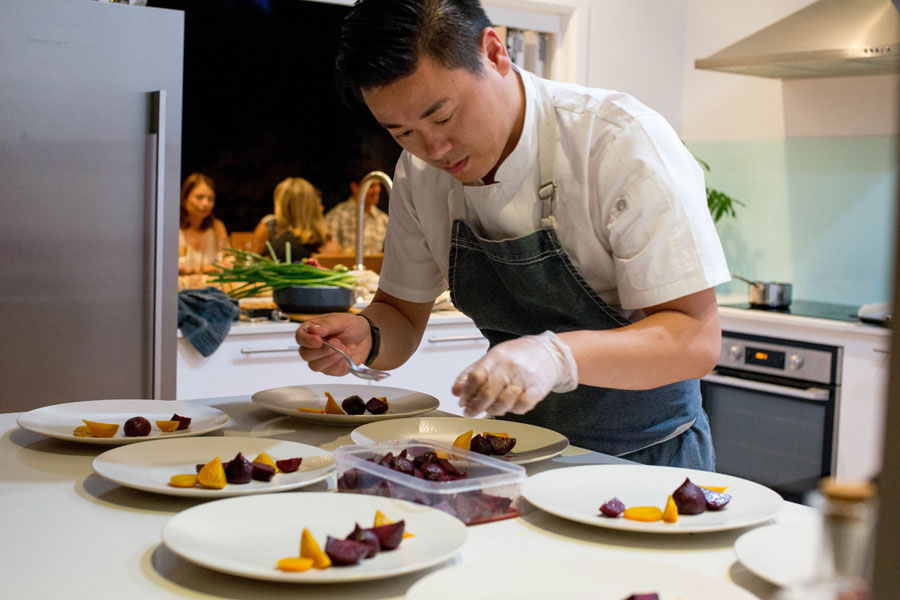
Personal chef preparing an elegant dish in a private London kitchen

01

Private Chef Clients Research Extensively Before Reaching Out

A client hiring a personal chef for a dinner party for ten at £800 will spend 20 minutes on your website before they consider picking up the phone. They are evaluating your food photography, the aesthetic register of your presentation, your cuisine style, your qualifications, and whether you have demonstrably cooked for people in similar circumstances. This research phase is long and deliberate — the higher the value of the occasion, the more thorough it is.

A website that is thin, lacks professional photography, or presents the service as if it were a restaurant listing rather than a bespoke personal service loses that client to a chef whose digital presentation matches the quality of what they do in the kitchen. At this price point, the website is not just a brochure — it is the audition. Clients who cannot evaluate quality from your website before contacting you will often not contact you at all.

02

Service Pages That Cover Every Way Clients Hire a Personal Chef

A client hiring you for weekly meal prep in their Kensington home has completely different requirements from a couple planning a private anniversary dinner, or a family wanting an in-villa chef in Tuscany, or a PA sourcing a chef for a board dinner at a client's Mayfair townhouse. Each service type needs its own page: dinner party chef, weekly meal prep, holiday villa chef, corporate catering, cooking lessons, private pop-up dinner.

Each page speaks directly to that client's specific brief — explaining how the service works, what is included, how far in advance to book, and what investment to expect. These pages each target a distinct search term ('dinner party chef London', 'personal meal prep chef London', 'private dining chef South Kensington') and serve clients who already know what they want. A single services overview page trying to cover all of these simultaneously ranks poorly for each and converts fewer of any.

03

Sample Menus and Food Photography Are Your Primary Sales Assets

A personal chef's website lives or dies on food photography. Three seasonal sample menus — a canapé selection, a four-course dinner menu, and a relaxed weekend lunch — each with professional photographs of the finished dishes, demonstrate range, technical competence, and aesthetic sensibility simultaneously. Poor photography of excellent food communicates the wrong level; professional photography of even straightforward dishes communicates precision and care.

Cuisine style pages — modern British, Mediterranean, Japanese-influenced, plant-based — allow clients with a specific direction to confirm immediately that you work in the register they want, without having to read everything and infer it. A dietary specialisms page — strictly vegan cooking, coeliac-safe preparation with segregated equipment, complex allergen management — widens the brief pool to the significant proportion of London private clients for whom allergen management is a prerequisite rather than a preference, and who are actively searching for a chef who takes this seriously.

04

Credentials, Experience, and Client Confidentiality

A Michelin-starred restaurant background, a Le Cordon Bleu or Leiths qualification, or years of cooking for high-profile private clients carries real weight — but naming private clients directly requires care, and for many in the HNW space, breaching that discretion is a credibility-ending move. Anonymised testimonials with enough specificity to be convincing — 'a City fund manager and his family, weekly for four years in Chelsea' — and references to the types of engagements you take on (HNW households, UHNW family offices, corporate off-sites, film production catering) build the required credibility without naming names.

UK-registered food businesses must comply with food hygiene regulations and hold Food Standards Agency registration. Displaying your food hygiene certificate level, allergen management training, and any professional indemnity or public liability insurance on your website adds a compliance dimension that corporate clients and UHNW households with formal household management increasingly require before onboarding any external contractor.

05

Recurring Corporate Clients and the Weekly Engagement Model

A single corporate client booking weekly office lunches at £600 per session generates approximately £28,800 per year in recurring revenue — equivalent to thirty-six one-off dinner party bookings. A client commissioning a monthly board dinner at £1,800 generates £21,600. The compounding value of recurring corporate clients is categorically different from one-off event work, and the website needs to speak directly to the people who commission these arrangements.

Corporate decision-makers and PAs researching a regular chef service are evaluating discretion, reliability, allergen competence at scale, food hygiene documentation, and the ability to adapt to dietary requirements across a rotating guest list — not just cuisine style. A corporate services page that addresses these specific requirements — including your approach to dietary briefing before each session, your emergency availability policy, your food safety documentation, and any previous corporate clients (anonymised) — converts this audience, who search with very different terms ('corporate chef London', 'office lunch chef regular', 'private dining for board meetings London').

06

Build Scope and ROI for London Personal Chefs

A personal chef website built to this standard — individual pages for each service type, seasonal sample menus with food photography, cuisine and dietary specialism pages, a corporate services section, an enquiry form capturing occasion, guest count, dietary requirements, date, location, and budget, local SEO for London and borough-specific searches, and a holiday/destination chef page — costs between £1,300 and £2,900 depending on menu content volume, photography integration, and the number of service pages required.

A single retained corporate client generating £28,800 per year pays for the most comprehensive build within the first month of engagement. Even for chefs focused primarily on private event work, two or three additional dinner party bookings per month found through organic search — at an average value of £600 each — recoup the investment within three to four months. Chefs who previously relied on agency listings (which typically take 20–30% commission per booking) find that a properly optimised direct website makes that commission cost disappear within the first year.

Vali Neagu

Written by

Vali Neagu

Founder, Web Design Studio London

Building conversion-focused websites and web applications for London businesses. Next.js, design, and strategy — in-house, fixed price.

Related services

Turn the research into a page.

These commercial pages connect the guide to enquiry-focused services, which supports topical depth and conversion.