WDSL

London web design guide

Web Design for Tattoo Studios London

Tattoo clients choose their artist before they choose their studio. The search typically goes: identify a style they want, find artists working in that style, review portfolios to find the best quality available at a price they can reach, then book. Your studio website needs to make every step of this journey easier — clearly communicating style identity, presenting portfolio work in the best possible light and making consultation booking straightforward. London tattoo studios that invest in a website that works this way fill their books with motivated clients who have already committed to the style and the artist.

Ask for advice
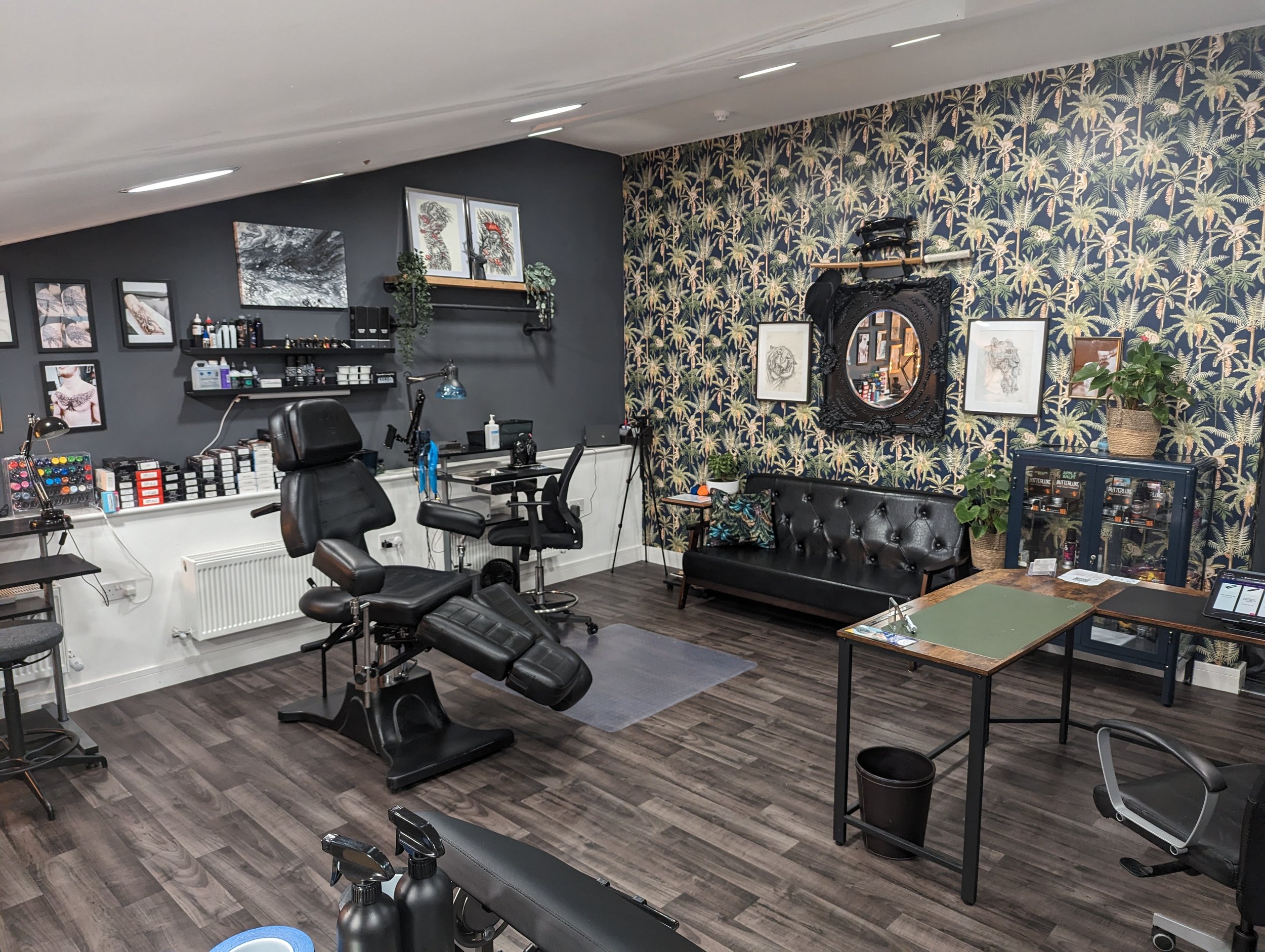

Modern London tattoo studio interior with clean professional workspace and artist portfolio displayed on walls

01

Style Identity and Artist Positioning

The most common mistake on tattoo studio websites is presenting a generic portfolio of work across multiple styles without clearly communicating what the studio — and each artist within it — specialises in. Tattoo clients searching for a specific style (fine line, blackwork, Japanese traditional, neo-traditional, realism, watercolour, geometric, illustrative, dot-work, lettering) are not looking for a studio that does everything. They are looking for an artist who is specifically excellent at what they want. Your homepage and each artist page should lead with style identity — 'Specialising in fine line and botanical work', 'Traditional American and Japanese tattooing' — before showing anything else. A studio that leads with a clear aesthetic identity attracts clients who are specifically looking for that style and converts them at far higher rates than a studio that presents as a generalist.

02

Individual Artist Portfolio Pages

In tattoo studios with multiple artists, the most effective website structure gives each artist their own portfolio page — a dedicated space that shows their specific style, their best work, their availability and their booking process. Clients choosing between studios are often actually choosing between specific artists, and a single gallery that mixes all artists' work makes this selection significantly harder. Individual artist pages allow each practitioner's style to be shown in context, let clients read about the artist's background and influences, and give each artist's name a chance to rank in Google search — 'Jane Smith tattoo London', 'fine line tattoo artist East London' — which can be a significant source of direct bookings for artists who have built any social media following or previous reputation. Photography quality is paramount: portfolio images that are well-lit, sharp and shot without distracting backgrounds show the work properly and convert clients who are comparing the precision and technique of different artists.

03

Consultation Booking and the Client Preparation Process

Tattoo bookings — particularly for larger or custom pieces — typically involve a consultation before the session, either in person or via email with reference images. Your website's booking flow should make it easy to request a consultation with a specific artist, describe the desired tattoo (placement, size, reference images), state a preferred timeframe and understand the deposit process. A clear explanation of how custom tattoo design works — that designs are created for each client individually, that the final design may be revealed on the session day, that modifications can be requested — manages expectations and reduces the uncertainty that prevents clients from committing. A deposit policy page that explains when deposits are required, how they are applied to the session cost and your cancellation and rescheduling policy prevents misunderstandings and reduces no-shows.

04

Aftercare Guidance and Healing Information

Comprehensive aftercare information is one of the most useful things a tattoo studio website can provide, and it has a secondary benefit: it demonstrates that you take the health and healing of your work seriously. A dedicated aftercare page covering the immediate post-session care (keeping the tattoo covered, cleaning, moisturising), the healing timeline (peeling, itching, colour settling), what to avoid during healing (sun, swimming, tight clothing over the tattoo) and when to be concerned about infection is content that clients actively search for and that builds trust before a booking. Linking to your aftercare page in booking confirmations and post-session communications keeps clients returning to your website and gives them a resource to share with partners or family members who are curious about their new tattoo.

05

Studio Hygiene, Licensing and Safety Standards

London tattoo studios must be registered with their local authority under the London Local Authorities Act and must comply with Environmental Health Officer (EHO) standards for hygiene, sterilisation and single-use equipment. Displaying your council registration certificate, your sterilisation equipment (autoclave), your use of single-use needles and disposable cartridges, and any relevant first aid qualifications gives prospective clients — particularly first-time clients who are nervous about the process — the reassurance they need. The tattoo industry has some outstanding practitioners operating to the highest standards of hygiene and care, and some operating at unacceptable risk to client health. A website that demonstrates clearly that your studio operates to the highest standards attracts health-conscious clients and justifies premium pricing that reflects the investment in proper equipment and training.

06

Flash Events, Walk-In Availability and Social Media Integration

Many tattoo studios operate a mix of appointment-only custom work and walk-in availability for flash designs — pre-drawn designs offered at a fixed price on specific days. Integrating your social media presence with your website allows Instagram followers who see a flash design posted on a Thursday evening to click through and book it immediately. A flash and walk-in page that explains how your walk-in sessions work — whether it is first-come-first-served, whether designs can be reserved, typical session lengths and prices — captures clients who want a tattoo but prefer to choose from existing designs rather than commission custom work. Regular updates to your flash sheet or available designs, integrated with social media, drive repeat visits to your website and build engagement with a community of interested clients.

07

Local SEO for London Tattoo Studios

Tattoo studio searches in London divide between style-based searches ('fine line tattoo artist London', 'Japanese tattoo studio East London') and location-based searches ('tattoo studio Shoreditch', 'tattoo near me Dalston'). Both types of search can be won with the right website structure. Style-specific content — dedicated pages or sections for each style specialism — ranks for style searches. Location-specific content and a well-optimised Google Business Profile rank for location searches. Your Google Business Profile should be verified with your studio address, opening hours, service categories (Tattoo Shop, Body Piercing Shop), recent portfolio photos updated regularly and active review management. For artists who have moved studios or who work at multiple locations, consistent NAP information across all platforms prevents the local authority dilution that comes from inconsistent business information.

Related services

Turn the research into a page.

These commercial pages connect the guide to enquiry-focused services, which supports topical depth and conversion.