WDSL

London web design guide

Web Design for Sports Coaches in London

Instagram shows your technique and personality — Google captures the client who has already decided to invest in coaching and is searching 'swimming coach London' or 'sprint coach south London' right now. A sports coach without a website loses these high-intent clients to competitors who have one. A professional website with session type pages, client results case studies, clear qualification display, and a free trial offer converts the searches that social media alone cannot capture.

Ask for advice
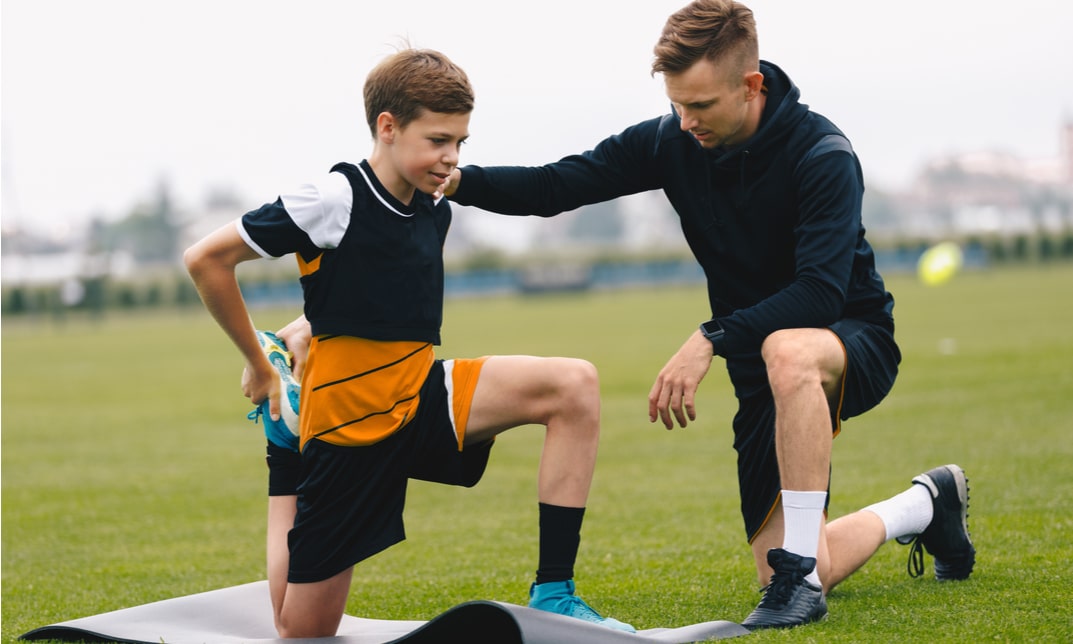

London sports coach working with an athlete on a track, demonstrating professional coaching qualifications

01

Why London Sports Coaches Need a Website Beyond Social Media

Instagram and TikTok are effective for brand awareness — they show technique, personality, and client results in a format optimised for passive discovery. But a client who has already decided to invest in coaching does not search Instagram to find a coach — they search Google: 'swimming coach London', 'sprint coach south London', 'tennis coach Wimbledon', 'boxing coach Bethnal Green.' These are buyers, not browsers, and they need a website to make the decision to book, not a social profile. A sports coach without a website loses these high-intent clients to competitors who have one. The website also provides the credibility infrastructure that social media cannot — formal qualification display, insurance confirmation, structured session information, booking system, and client testimonials with performance metrics. For coaches working with corporate clients or sports clubs rather than individuals, a website is the non-negotiable first step in being taken seriously during an RFP or partnership discussion. The investment in a professional coach website typically pays back within the first one or two new client bookings.

02

Session and Programme Pages with Clear Pricing

The core commercial pages of a sports coach website are the session type pages: individual coaching, group sessions, performance assessment, online coaching, and sport-specific intensive programmes. Each page should describe the session in concrete terms — duration, typical client profile, what the session covers, how results are measured, and the price. London sports coaching pricing ranges enormously: a strength and conditioning coach at a premium facility in the City charges £120–£200 per hour; a football skills coach in South London might charge £40–£70. Displaying prices removes the friction of enquiry for price-sensitive clients and removes the price-objection stage of the sales process for premium clients who are selecting on outcome rather than cost. Programme pages — a 12-week marathon training block, a six-week junior academy holiday programme, a 10-session technique intensive — convert at higher values than individual sessions, and the website is the correct place to present these with full outcome descriptions, session-by-session outlines, and clear booking steps.

03

Client Results and Case Studies

In sports coaching, outcome evidence is the primary purchase driver. A runner who wants to break 3:30 for a marathon will invest in a coach who can show they have done this before — not simply a coach with a Level 3 qualification and a professional website. Each case study should describe the client's starting position (5K time, injury history, training background), the programme structure, the coaching interventions that made the difference, and the measurable outcome (marathon time, competition result, injury resolution, strength benchmark improvement). Case studies from London-based competitions and venues — London Marathon, Surrey Hills cycling sportives, Crystal Palace athletics track, Aquatic Centre swimming competitions — contextualise the results for London-based clients evaluating relevance. Written testimonials from named clients (with their permission) carry more weight than anonymous quotes. Video testimonials — 30 to 60 seconds from a client describing their result — are the most persuasive format and can be embedded on the case study page and repurposed for social media.

04

Qualification and Insurance Display

Sports coaching in the UK has a patchwork of governing body qualifications, and clients — particularly parents of young athletes and HR managers commissioning corporate wellness coaching — need to verify competence before booking. A clear qualifications section on the about page or coach profile should list: the governing body qualification (UK Athletics Level 3, British Swimming Level 2, LTA Level 4, England Boxing Level 2, REPs Level 3 PT), the certifying body logo, and any specialist modules completed (strength and conditioning, nutrition, return to play, youth development). CIMSPA (Chartered Institute for the Management of Sport and Physical Activity) registration is the unified professional register that employers and clients increasingly recognise across sport disciplines. Public liability insurance — minimum £5 million for most solo coaching operations — and DBS Enhanced Disclosure (mandatory for working with under-18s) should be stated explicitly with the issuing body named. Coaches working in schools, sports clubs, or corporate environments often encounter safeguarding policy requirements: a website that proactively displays DBS status and safeguarding training completion removes a friction point from the B2B sales process.

05

Sport-Specific and Niche Specialisation Pages

A sports coach who can credibly claim specialisation in a specific discipline, athlete profile, or performance goal ranks more effectively in search and converts more readily from organic traffic than a generalist who offers every sport. 'Running coach London' is a competitive keyword; 'ultra marathon coach London' or '5K to 10K running coach south London' targets a smaller but more commercially motivated audience. Specialisation pages should exist for each distinct service vertical: if you coach both adult recreational runners and under-18 competitive athletes, each audience has different search behaviour, different objections, and different proof requirements — they need separate pages. Online coaching as a distinct service category has its own page requirements: clients searching 'online sports coach UK' are not constrained by geography and may be comparing against coaches based anywhere in the country. A dedicated online coaching page with video call setup information, how online technique analysis works, and testimonials specifically from remote clients addresses this audience's specific questions.

06

Borough and Venue Pages for Local Coach Search

Sports coaching searches in London have strong local intent — clients want a coach who operates at a venue they can reach. 'Swimming coach Hackney', 'personal trainer Brixton', 'tennis coach Wimbledon', 'gymnastics coach Richmond' are the terms that convert at highest rates because they combine sport specificity with location specificity. A coach who operates from a fixed venue — a leisure centre, sports club, school facility, or private studio — should have a page for each primary location, confirming the address, transport links, parking availability, and which sessions run at that venue. A coach who travels to clients across multiple boroughs (common for tennis and golf coaches) should have borough-specific pages for each operational area. These pages rank for local searches and also provide the location reassurance that converts a browser into someone who books an initial assessment session. The page should include a map embed showing the venue location, nearby transport options, and a direct booking link for sessions at that location.

07

Free Trial Sessions and Lead Capture for New Client Acquisition

The primary conversion barrier for prospective coaching clients is uncertainty about fit — they do not know whether the coach's style, approach, and assessment of their needs matches what they are looking for before committing to a block of sessions. A free taster session, free 30-minute movement assessment, or first session at a reduced introductory rate removes this barrier directly. The website should make the trial offer prominent — homepage, session pages, and a dedicated landing page targeting searches like 'free personal training session London' or 'trial swimming lesson adult London.' The trial converts to a paid package when the coach delivers a specific, measurable outcome assessment during the free session: 'In our assessment, your main limiter was hip flexor tightness restricting your running economy. Our eight-week programme addresses this directly and targets a 45-second improvement in your 10K time.' A specific, evidenced recommendation for continued coaching converts at three to four times the rate of a generic 'I think we could work well together.' The website supports this conversion by providing the booking infrastructure and confirmation sequence that makes the next step frictionless.

WS

Written by

Web Design Studio London

A specialist web design and digital studio based in Covent Garden, London. We build conversion-focused websites, ecommerce stores, and web applications for London businesses — combining strategy, design, and Next.js development in-house.

Related services

Turn the research into a page.

These commercial pages connect the guide to enquiry-focused services, which supports topical depth and conversion.