WDSL

London web design guide

Web Design for Interior Designers London

An interior designer's website is the first evidence of their aesthetic judgement. Before a prospective client reads a single word of copy, they have already formed an opinion about your work from your site's visual quality, photography and layout. London interior designers who invest in a website that matches the standard of their work attract projects and clients at the level their work deserves — and spend less time on enquiries that are not the right fit.

Ask for advice
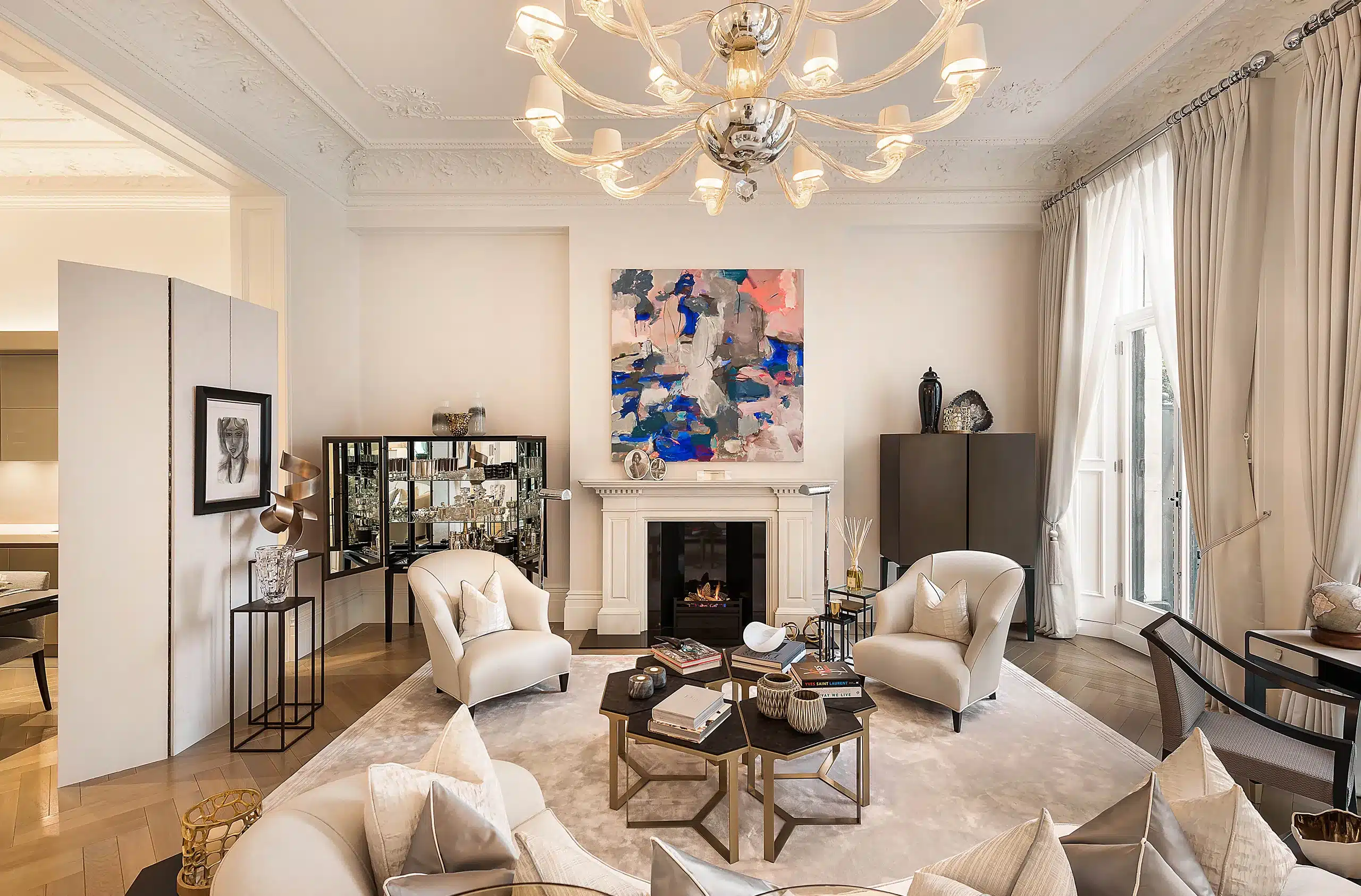

Luxury London interior design studio project showcase featuring elegant contemporary living room design

01

Portfolio Presentation That Reflects Your Standard of Work

The portfolio is the centrepiece of every interior design website and the primary conversion tool. Project photography should be at the highest quality you can achieve — professionally shot, properly lit, shot from considered angles that do justice to the spatial design. Each project page should include a brief that explains the client's brief, the design challenge, the key decisions made and the outcome, alongside a full set of photographs. This narrative context transforms a gallery into a demonstration of design thinking — which is what the clients commissioning significant projects are actually evaluating. Organising your portfolio by project type (residential, commercial, hospitality) or style (contemporary, traditional, eclectic) makes it easy for prospective clients to find projects most relevant to their own brief and allows you to attract work aligned with your strongest areas.

02

Style Positioning and Visual Identity

The interior designers who attract the most consistent and well-aligned project enquiries have a recognisable aesthetic voice — a visual identity that communicates their approach before a client reads a single word. Your website's visual design should express the same sensibility as your interior design work: if your work is minimal and considered, your site should be the same; if it is bold, maximalist and textured, the site should reflect that. The designer websites that fail are those where the site's visual design contradicts or is completely neutral relative to the design work shown — it creates cognitive dissonance and leaves prospective clients with no clear sense of what you stand for. Colour palette, typography choices, white space, image cropping, layout density — each is a signal about your aesthetic sensibility. Get them right and your site works as a pre-sell before the portfolio is even opened.

03

About Page and the Designer Behind the Work

Interior design is a deeply personal service — clients are inviting a designer into their home or business and trusting their judgement on decisions that will affect their daily life for years. Your about page should introduce you genuinely: your background, your influences, your education and training, what drives your design decisions and what you believe makes a space work. Designers who share a genuine perspective — on proportion, on the relationship between architecture and interiors, on the importance of natural light, on quality of material — build a connection with prospective clients who share that sensibility. A photograph or film of you in your studio or on site is more effective than a formal headshot. Press and publication features — AD, Elle Decoration, House & Garden, Design Week, World of Interiors — should be displayed prominently as they are the strongest third-party credibility signals available in interior design.

04

Service Descriptions and the Design Process

Many prospective interior design clients — particularly residential clients commissioning their first significant project — are uncertain about what working with a designer involves, how the process works and what it costs. A clear service page that explains your process from initial consultation through to project completion — site survey, brief development, concept design, design development, specification, contractor management, installation — demystifies the engagement and builds confidence in prospective clients who are hesitant about the commitment. For designers who offer distinct service tiers — full interior design, decorating service, online design — each tier should have its own description. Transparency about fees, even if only an indicative range, prevents wasted time on enquiries from clients whose budgets are misaligned with your service level.

05

Press, Awards and Industry Recognition

In interior design, press coverage and industry recognition carry enormous weight with prospective clients. A dedicated press page displaying features in design publications — with publication logos, dates, brief descriptions and links to the original articles where available — builds credibility far more effectively than self-promotional copy. Awards from BIID, SBID, the Andrew Martin Interior Design Review, Dezeen Awards or local property industry awards should be displayed on your homepage and about page with award logos and descriptions. Being shortlisted or commended as well as winning is worth displaying — it demonstrates that your work is being evaluated and recognised by the industry. For designers working in specific sectors (luxury residential, hospitality, commercial), sector-specific awards carry particular weight with prospects in that sector.

06

Enquiry Process and Client Pre-Qualification

Interior design enquiries vary enormously in quality and fit — from clients with budgets and projects that align perfectly with your work, to speculative enquiries with unrealistic expectations. An enquiry form that asks the right pre-qualification questions saves significant time: project type (new build, renovation, single room, full house), location, approximate budget (ranges are sufficient), anticipated start date, and a brief description of the project and what the client is hoping to achieve. This information allows you to respond with genuine relevance, prepare for the first conversation and make an initial assessment of fit. An auto-response that explains your typical intake process — including timelines and what the initial consultation covers — maintains momentum during the period between enquiry and first conversation.

07

Local SEO and London Interior Design Market Visibility

London's interior design market divides broadly into residential and commercial, and within residential into distinct areas and price points. Local SEO for interior designers is effective because clients often prefer a designer who is familiar with London architecture, London planning regulations and London suppliers — and who can be on site in their area without significant travel. 'Interior designer Kensington', 'interior decorator Notting Hill', 'luxury interior design Chelsea', 'commercial interior design London' — these searches bring in clients who have already qualified by location and often by project type. A Google Business Profile with your studio address, regularly updated photos of recent projects and active review management strengthens local organic visibility. For designers whose work spans multiple property types or London areas, dedicated landing pages for each serve both clients and Google.

Related services

Turn the research into a page.

These commercial pages connect the guide to enquiry-focused services, which supports topical depth and conversion.